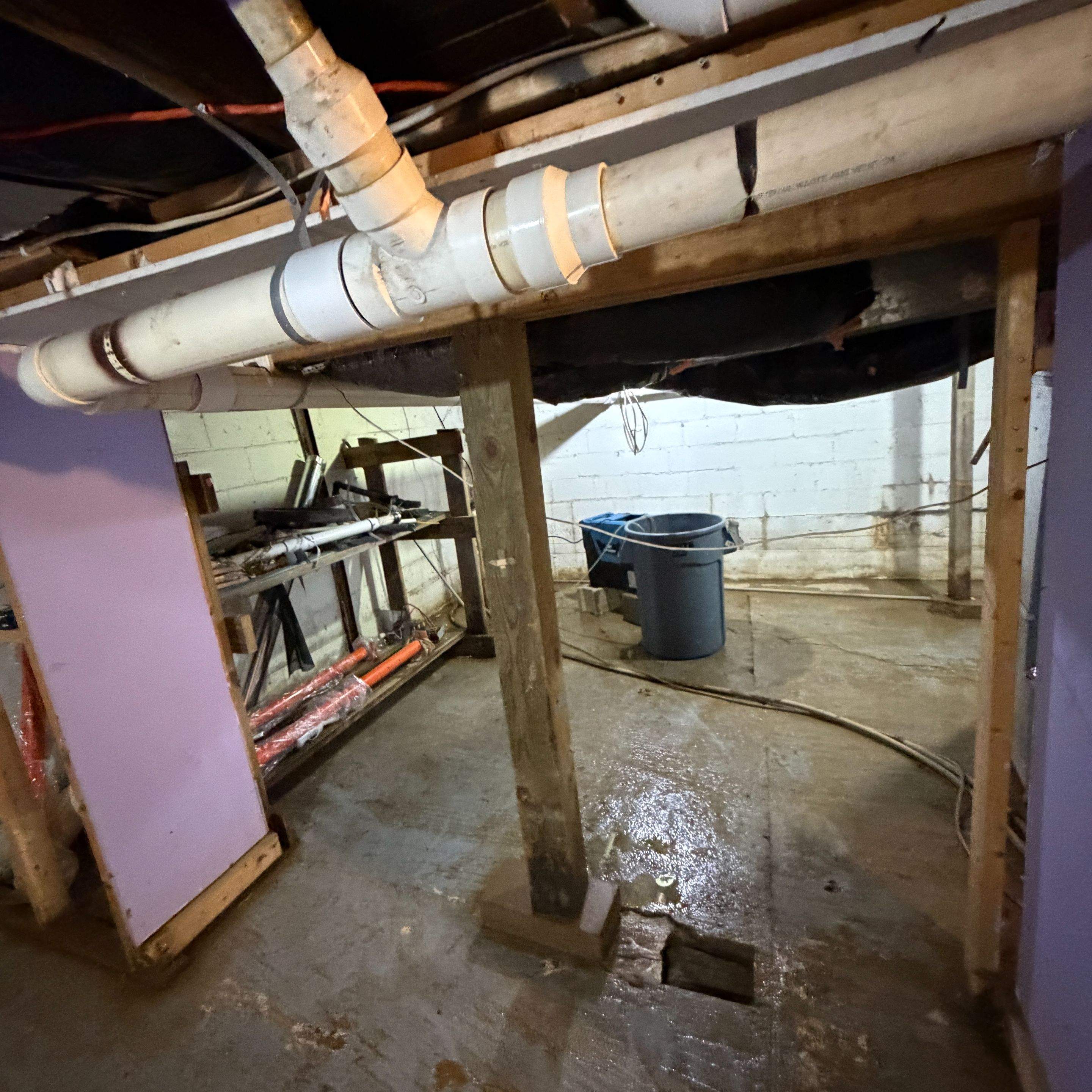
Before the Table: The Three Variables That Decide Everything
Every wet drywall decision in Covington comes down to three variables working together. The first is the IICRC water category. Category 1 is clean water from a supply line or a refrigerator line. Category 2 is gray water from a dishwasher discharge, washing machine overflow, or aquarium. Category 3 is black water, meaning sewage, toilet overflow past the trap, or rising groundwater. Category determines whether drying is even legal under IICRC S500 standards. You cannot dry-in-place Category 3. The drywall comes out, full stop.
The second variable is saturation depth and duration. Drywall that has been wet for under 24 hours, where the paper face is still intact and moisture readings are below 16 percent, can usually be saved with controlled drying. Drywall wet longer than 48 hours, or showing swelling, bubbling paint, or soft texture, has lost structural integrity. The gypsum core has begun to break down and no dehumidifier will reverse that. Paper-faced gypsum also feeds mold growth once moisture content climbs above 20 percent, which is why time is a structural variable, not just a cosmetic one.
The third variable is insulation behind the wall. Fiberglass batts that wicked water hold moisture against the back of the drywall for weeks. Closed-cell spray foam, common in newer Covington builds, can actually trap a hidden water layer between foam and drywall that never reads on a surface meter. We see this constantly. The wall looks dry. The thermal camera tells a different story. Cellulose insulation is the worst offender, because it absorbs many times its weight in water and rarely releases it without removal. Covington Water Restoration techs probe insulation directly through small inspection holes before approving any dry-in-place plan.
The Comparison Table: Every Realistic Wet Drywall Scenario
| Scenario | Water Category | Save or Replace | Method | Typical Cost Range | Timeline |
|---|---|---|---|---|---|
| Clean supply line leak, wet under 24 hrs, no insulation behind | Cat 1 | Save | Dry-in-place, air movers plus dehu, monitored 3 days | $800 to $1,600 | 3 to 5 days |
| Clean leak, wet 24 to 48 hrs, fiberglass insulation soaked | Cat 1 | Partial replace | Flood cuts 24 inches up, remove wet insulation, dry cavity | $1,400 to $2,800 | 4 to 6 days |
| Dishwasher or washer overflow into kitchen wall | Cat 2 | Replace lower 2 ft | Flood cuts, antimicrobial, sanitize studs, new drywall | $1,800 to $3,500 | 5 to 8 days |
| Ceiling drywall from upstairs bathroom leak, sagging | Cat 1 or 2 | Replace sagging section | Remove bowed panels, dry framing, replace and texture-match | $1,200 to $3,200 | 4 to 7 days |
| Sewage backup or toilet overflow contact | Cat 3 | Full replace, minimum 24 in above waterline | Demo, HEPA, antimicrobial, PPE protocols, full rebuild | $3,500 to $9,000 | 7 to 12 days |
| Basement drywall from groundwater or sump failure | Cat 3 | Full replace lower wall | Demo to ceiling if wicking present, dehumidify cavity, rebuild | $2,800 to $7,500 | 8 to 14 days |
| Hidden leak found weeks later, visible mold present | Cat 2 to 3 | Replace, mold protocol | Containment, negative air, remediation, post-test, rebuild | $4,500 to $12,000 | 10 to 18 days |
| Storm-driven rain through window or roof, caught fast | Cat 1 | Often save | Dry-in-place, verify no insulation saturation | $700 to $1,500 | 3 to 5 days |
After the Table: Reading Between the Rows
Notice that the cost jumps are not linear. They are driven by category and by hidden damage. A Category 1 dry-in-place is cheap because nothing is demolished and nothing is hauled away. A Category 3 job in the same square footage runs five to ten times more because every porous material in contact with the water has to leave the property under IICRC S500 guidance. This is also where insurance adjusters scrutinize claims most carefully, which is why our water damage restoration documentation includes photos, moisture maps, and category determination in writing before demolition starts.
The most expensive mistake we see Covington homeowners make is the dry-in-place gamble on Category 2 water. Someone runs box fans on a dishwasher leak for three days, the surface reads dry, they paint over it, and ten weeks later mold blooms behind the baseboard. The remediation that follows costs more than the original proper repair would have. If you have any doubt about category, treat it as the higher category until a certified tech proves otherwise. Our guide on water damage behind walls and hidden leak detection walks through the thermal imaging and pin-meter process we use to confirm what is actually happening inside the cavity.
Flood cuts, the practice of removing the lower 24 inches of drywall, exist for a specific reason. Water wicks upward through gypsum at roughly 1 inch per hour in the first few hours. Cutting above the wick line lets us dry the cavity, treat the studs, and rebuild cleanly without trapping moisture. If you are dealing with basement saturation specifically, our basement flooding response process covers the additional vapor and humidity controls that basements demand.
What Happens After the Drywall Comes Out
Replacing the panel is the visible part of the job. The invisible part is what determines whether the repair actually holds. Once Covington Water Restoration pulls flood-cut sections, we record stud moisture at three heights, top plate, mid-stud, and sill plate, because water travels down framing as readily as it wicks up drywall. A sill plate reading above 18 percent means the drying plan extends another two to four days, regardless of how dry the wall cavity looks. We also inspect electrical boxes, since water that reaches a junction box can corrode terminals quietly for months before a circuit faults.
Texture matching is the final hurdle that catches DIY repairs. Orange peel, knockdown, and skip-trowel patterns each require specific spray pressures and trowel timing to blend into the surrounding wall. A patch that looks acceptable under primer often telegraphs through the finish coat under raked light from a window. Our crews keep texture samples from each Covington neighborhood era, since 1970s ranch homes, 1990s tract builds, and recent custom work all use different finish conventions. Getting the texture right is what makes the repair disappear, and it is the difference between a restoration and a visible scar.