Storm Damage in Covington, IN
Storm water in your Covington home measured before anything gets cut, then dried until the numbers match baseline
Covington Water Restoration delivers Storm Damage across Covington and surrounding areas with certified crews available 24/7 and every step documented for insurance. Call (765) 517-7678.
- Service: Storm Damage for Covington homeowners
- Service area: Covington, IN and surrounding areas
- Response time: 24/7 answering with priority emergency dispatch across Covington
- Licensed and insured (License #RC21100059)
- Serving Covington, IN since 2018
Storm Damage Cleanup in Covington
We handle storm damage cleanup across Covington, from tarping the opening to drying the house underneath it, and we're out day or night.
Storms Here
The Wabash River has a history of flooding. If your insurance company asks for a storm date, NWS Indianapolis keeps a list of past events.
Where Storm Water Ends Up
Homes near the Wabash River can see rising water after heavy rain.
After a storm we can be anywhere in Covington, from Covington Residential Historic District to the roads around the Fountain County Courthouse and Carnegie Library of Covington. Nearby, we also dry out storm damage in Perrysville, Veedersburg, Attica and Cayuga.
Expert Storm Damage for Covington Homeowners
Water from a storm keeps doing damage after the rain stops. Wet attic insulation and a ceiling cavity that stays damp give microbial growth the 24 to 48 hours it needs to start, and once it starts the scope changes and the price follows it. Covington Water Restoration dispatches to storm water losses in Covington within 2 hours with the extraction and drying equipment to get affected materials back under the moisture content where growth stalls out.
Storm water gets into a house in a handful of ways, like a lifted shingle, a failed flashing joint, an ice dam backing up under the eave or wind pushing rain through a soffit. Covington Water Restoration traces the path in your Covington home with a thermal camera and moisture meters, so the drying covers every room the water reached.
Nothing comes out of your house without a reason you can see on paper. Technicians show the homeowner the readings behind each removal, walk the scope line by line, and get a signature before demolition starts. If hidden damage turns up once a ceiling's open, that gets documented as a scope change with its own photos, and you approve it before the work goes ahead.
Before wet carpet or insulation goes in a dumpster, ask your adjuster whether they want to see it. The crew photographs the material in place and records its type and amount, and a small sample can be set aside if the adjuster asks. Covington Water Restoration lays out the removal list for your Covington home so that conversation has facts behind it.
Floodwater in your basement or garage calls for containment and protective gear, so it's worth a call before anyone wades in. Covington Water Restoration extracts the water in Covington and dries the structure afterward, with the soaked porous materials removed and photos at each stage. Call (765) 517-7678 to get a crew started.
Signs You Need Storm Damage Restoration
If you notice any of these in your Covington home, schedule a free inspection before the issue worsens.
Shingle granules piled in the gutters or washed out at the bottom of a downspout
Baseboard swollen at the bottom edge or pulling away from the wall it was nailed to
Mold spotting on the back wall of an upstairs closet or behind furniture on an outside wall
White chalky residue on a basement foundation wall where water has been moving through it
Ceiling texture cracked in a straight line that follows a joist or a roof truss
Ceiling stains in a hallway or closet far from any bathroom
Hardwood boards cupping near a patio door or garage entry
Dark staining or rusted nail points on the underside of attic sheathing and rafters
A sump pump that cycles every few minutes or runs continuously during a storm
Plaster ceilings with fresh hairline cracks and a dull, damp look
How Covington Water Restoration Handles Storm Damage
We follow these steps in order on every Covington job.
Wet Insulation Removal
Soaked batts and matted blown in get bagged out of the attic and the ceiling cavity, with type, depth and square footage recorded for the rebuild and for the claim. Wet insulation holds water against the ceiling board and loses its insulating value while it's wet.
Daily Monitoring
A technician returns every 24 hours while equipment runs, logs moisture content at the same marked locations, and repositions equipment wherever a zone's lagging. Rain during the drying phase triggers a recheck of the stabilized opening and of the materials sitting under it.
Progress Review With You
Partway through the job the technician walks the rooms with you and compares today's readings to the first day's. You hear which rooms are dry and which are lagging, and changes to the plan get approved before they happen.
Photo Report
Entry point photos, the water path, the daily readings and the itemized scope go into a photo report you keep. The crew walks you through it, and you sign off on the scope in writing before there's any demolition.
Reconstruction and Finish Work
Insulation goes back to the recorded depth, ceiling board gets hung, taped and finished, texture is matched to the existing surface, then paint, trim, flooring and anything else that came out. The rebuild follows the measurements taken during the drying.
Storm Damage in Covington
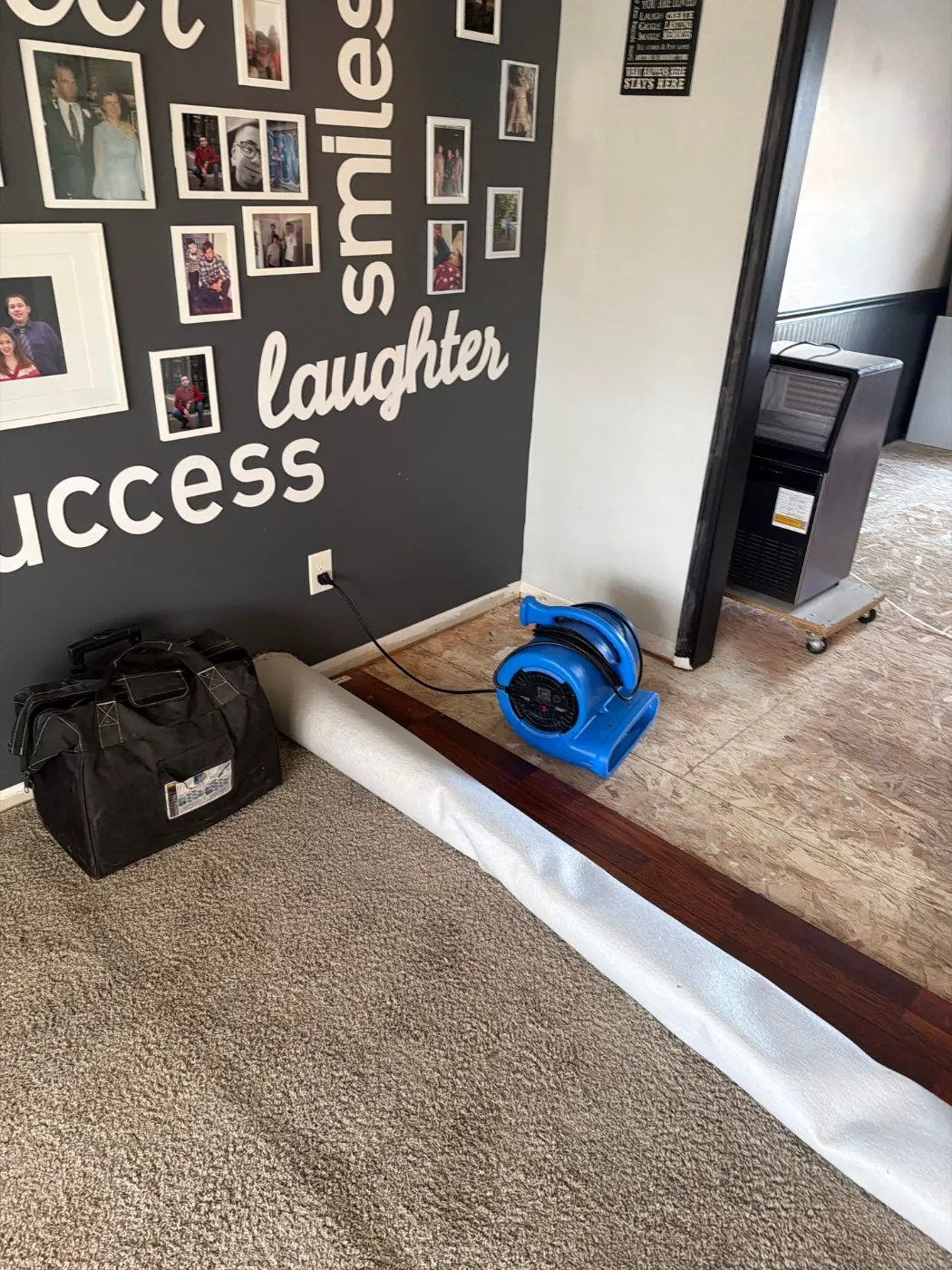
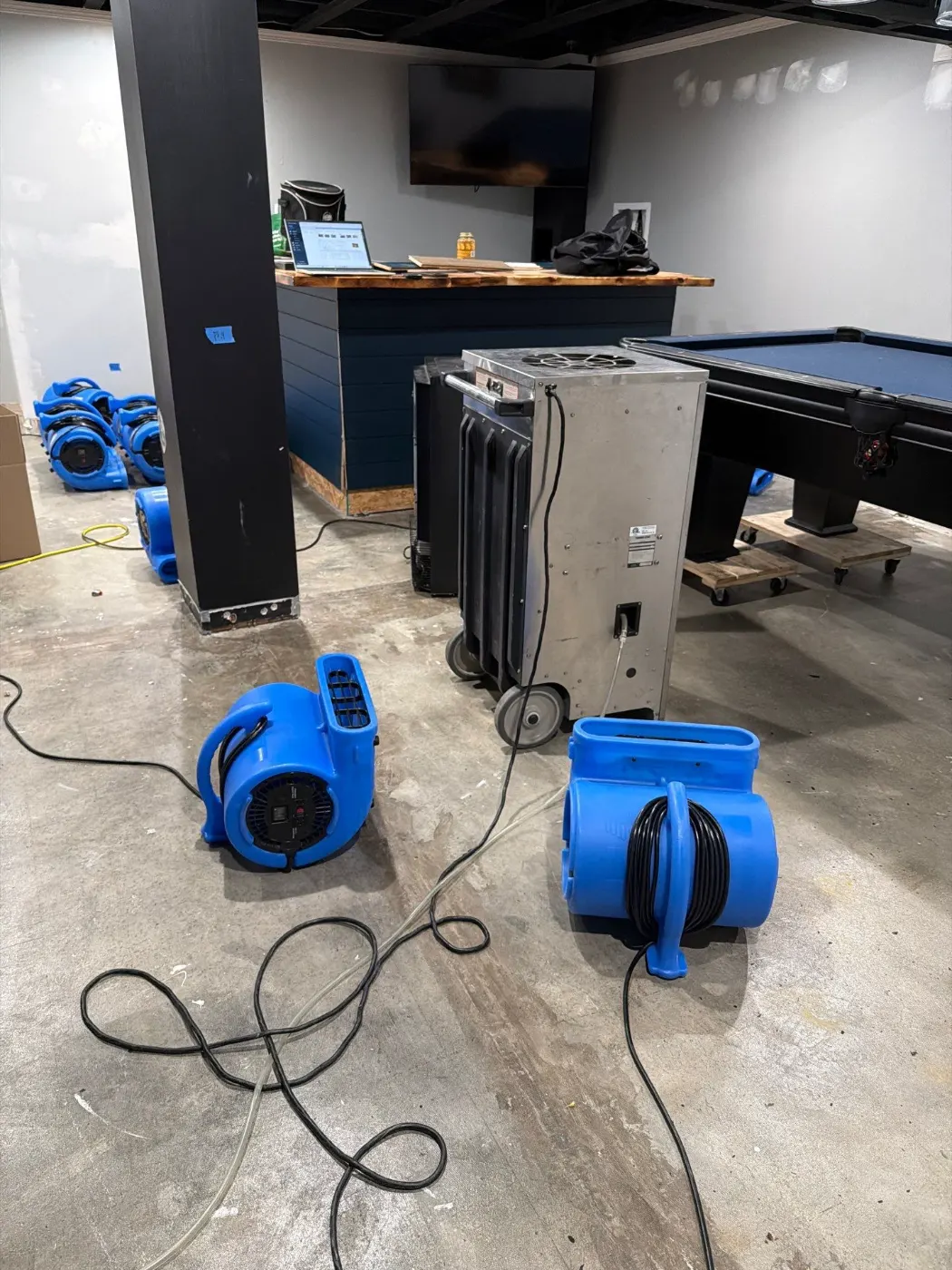
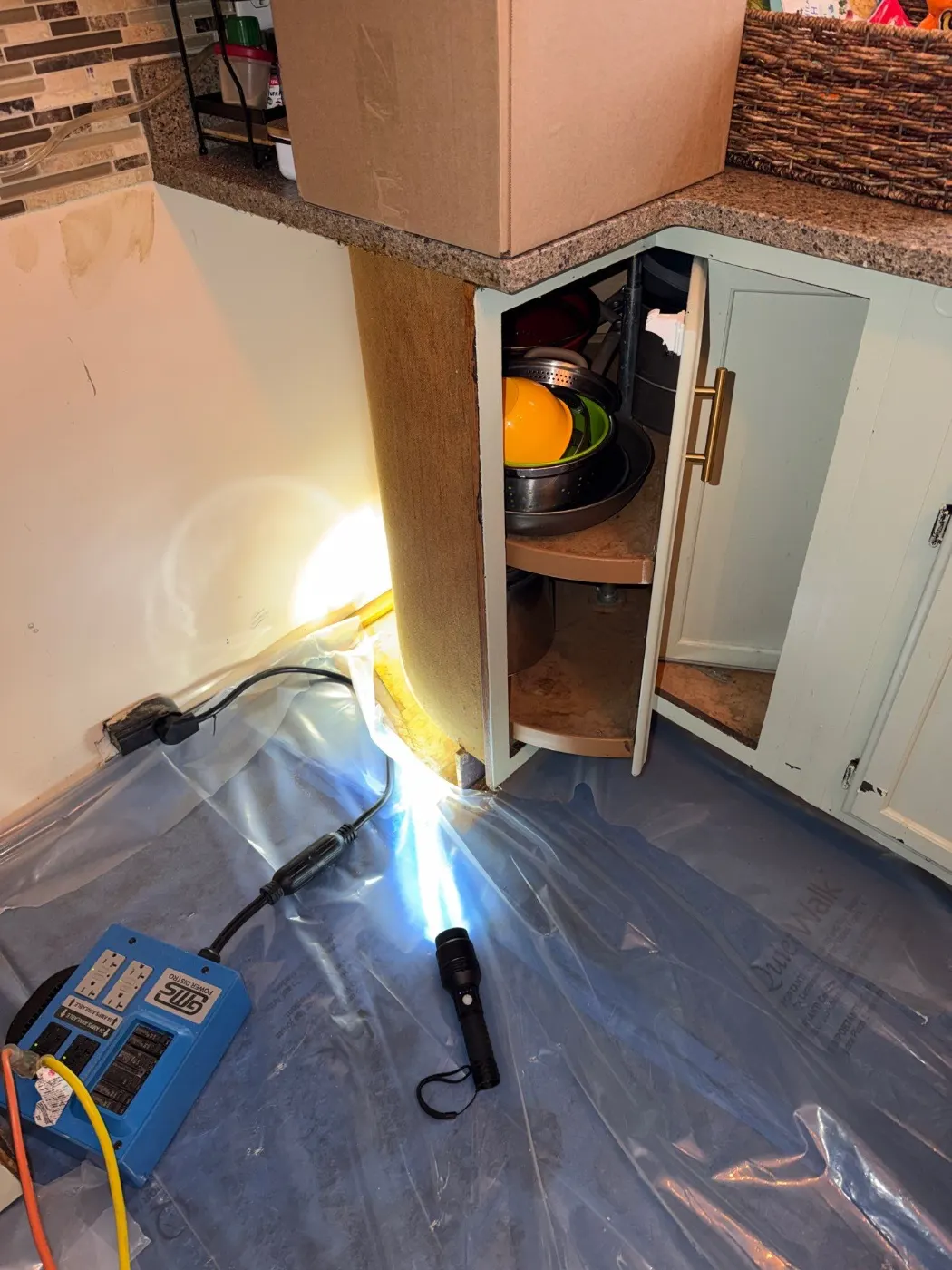
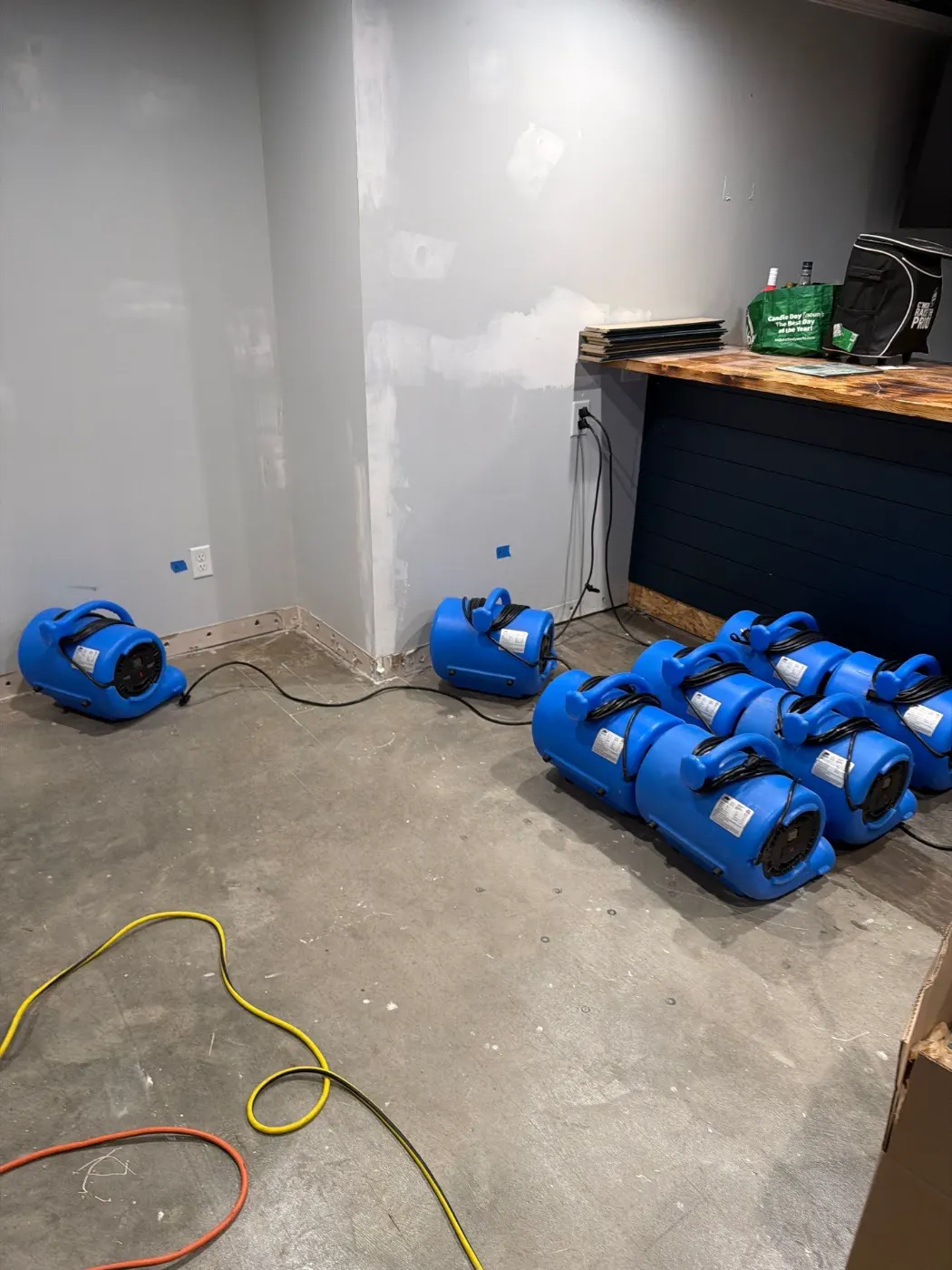
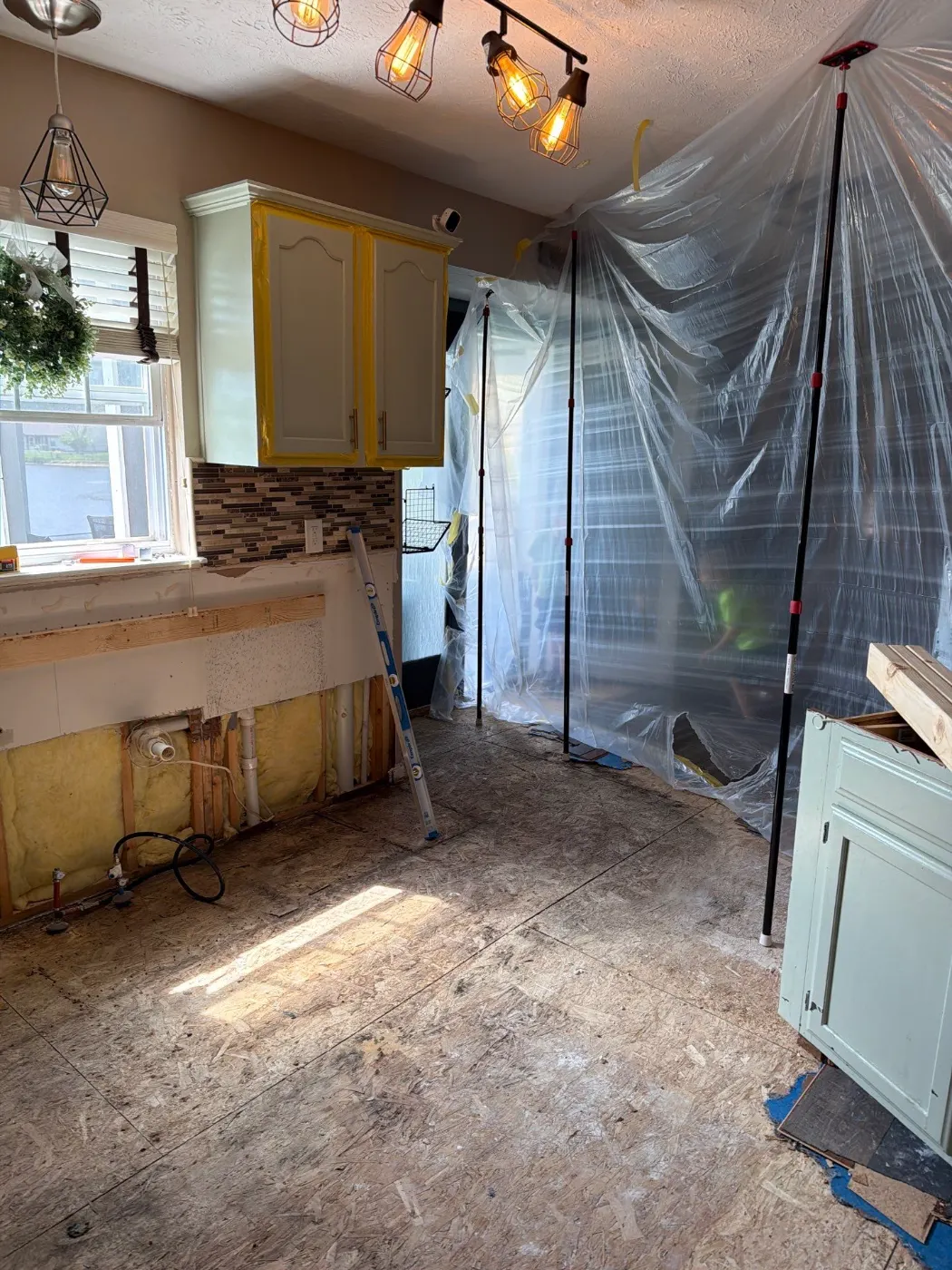
Photographs from real storm damage jobs completed by our crew in Covington and surrounding areas.
Storm Damage FAQ
Questions Covington homeowners ask us about storm damage restoration.
Guidance and Standards for Storm Damage
- The National Weather Service office in Indianapolis posts summaries of recent central Indiana storm and flood events. NWS Indianapolis Event Summaries
- The Indiana Department of Insurance advises against permanent repairs before your insurance company inspects the damage. Check your own policy for what it covers. Indiana Department of Insurance: Insurance Claim Tips
Covington Neighborhoods We Serve
We take storm damage calls in every part of Covington. Pick your neighborhood for local details.
Other Restoration Services in Covington
Covington Water Restoration handles the full scope of restoration work. Explore our other services below.
Water Damage Restoration in Covington
24/7 emergency response. IICRC certified water restoration from extraction to full dry out.
Learn more →Basement Flooding in Covington
Basement water emergencies handled fast. Extraction, drying, mold prevention.
Learn more →Sewage Cleanup in Covington
Category 3 biohazard cleanup. Full containment, decontamination, structural restoration.
Learn more →Request Storm Damage Restoration
Reach Us Directly
Our team is available 24/7 for emergencies and ready to schedule inspections during business hours.
Need Immediate Help?
For active water or mold emergencies, call us directly. We are available 24/7.